zambia herald : Latest News and In-depth Analysis
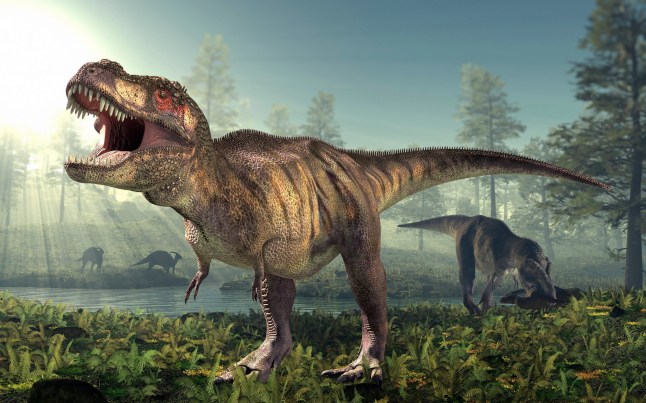
New research has found that dinosaur fossils could be used to better understand cancer tumours – and even bring about new treatments (Picture: Getty Images/Science Photo Libra)
Scientists believe they could develop new cancer treatments by studying the disease in the remains of prehistoric creatures.
Researchers discovered structures similar to red blood cells in dinosaur fossils,which they believe could help better understand tumours and even give rise to new treatments.
The ten-year study at Anglia Ruskin University was launched following the discovery of a fossil of a herbivorous Telmatosaurus transsylvanicus – known as a ‘marsh lizard’ – in Romania with a tumour in its jaw in 2016.
Oncologist Professor Justin Stebbing led researchers in a project to see if any parallels could be drawn between the tumour and human cancers.
Cancer specialist Dr Biancastella Cereser was part of the team of scientists that conducted a study into the unusual fossil.
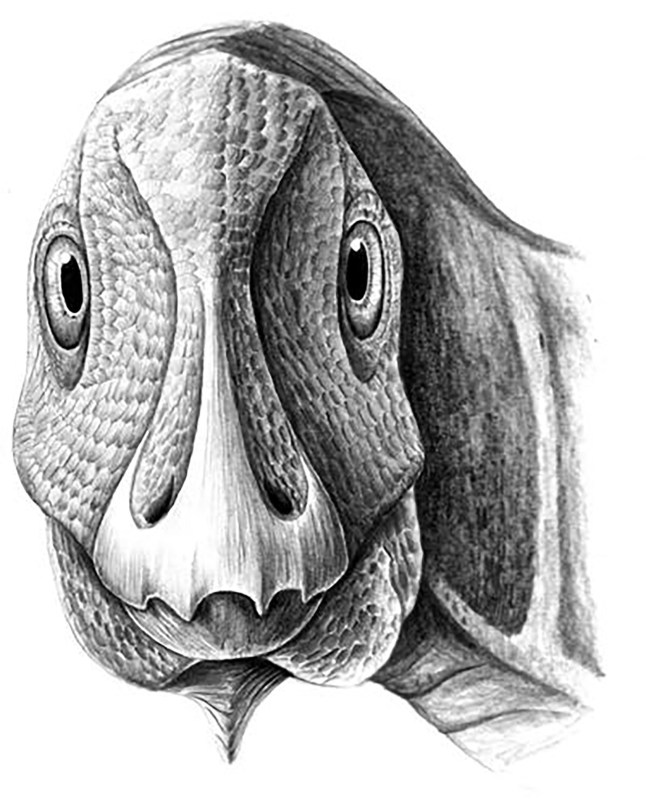
A reconstruction of a Telmatosaurus transsylvanicus – the species of fossil found in Romania with a tumour in its mouth (Picture: University of Southampton)
She told the Independent: ‘We contacted the town in Romania,which was very excited to loan us the fossil.’
The team then used a ‘very,very,very fine drill’ and a microscope to look inside the specimen,where they found structures resembling human red blood cells.
The development has helped researchers understand ‘the role of environment on cancer’, Professor Stebbing said.
He added that understanding the disease from a ‘very ancient perspective’ is another piece in the jigsaw.
The project in some ways bears a similarity to that of the upcoming Jurassic World movie,which is due to be released in cinemas on July 2.
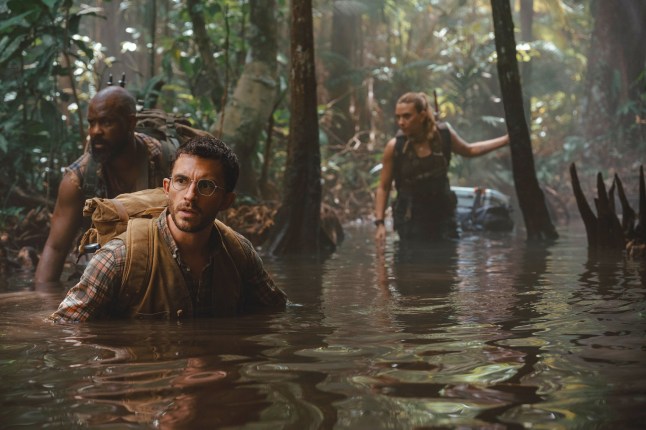
An image from the upcoming movie Jurassic World Rebirth. Like the study,the film follows scientists searching for prehistoric remains in order to revolutionise human treatments (Picture: Universal Studios/Amblin Entertainment)
The fourth film in the series follows a group of scientists trying to locate the remains of prehistoric species on an Atlantic island in a bid to create a life-saving drug for humans.
However,after getting stranded on the island,the team discovers it is home to the results of failed dinosaur experiments which have been thriving for decades.
They encounter some frightening mutations such as a Distortus Rex – a deformed,alien-like version of a T-Rex with six limbs.
But while the claim that dinosaurs can be somewhat resurrected using DNA from their fossils is inaccurate,Professor Stebbing says the discovery of proteins in soft tissues means prehistoric remains could help with the development of better treatments in the future.

Ebola responders in DRC have been attacked due to misinformation and false claims about the disease (Picture: AP Photo/Sebastien Kitsa Musayi)
Spotify is down for thousands of people (Credits: Shutterstock / Bangla press) Spotify has crashed for thousands of listeners globally both on the app and desktop versions.
Shenzhana Korolyova was killed while holidaying in the Altai Mountains with her boyfriend (Picture: East2west)
A tourist was killed after the paragliding nightmare in Benidorm (Picture: Getty Images) A British woman died following a parasailing accident in Benidorm after her glide is said to have spun out of